


Specialized Services
Surgical & laser
In veterinary dermatology, surgical procedures are frequently recommended to facilitate a more accurate diagnosis or to provide a more rapid path to recovery.
What it is
The specialists at Animal Dermatology Clinic are adept at using utilizing surgical procedures to contribute to better treatment outcomes for your pet. And with advanced use of CO2 laser surgery pioneered by Animal Dermatology Clinic dermatologists, we can address challenging dermatological conditions while reducing your pet’s time in surgery and accelerating their recovery.
Skin Biopsy
Skin biopsy, the most common type of surgery performed in pets, is the process of obtaining a small sample of skin or a skin lesion to provide more in-depth information about a particular disease, infection, growth or tumor. This procedure, almost always done outpatient and requiring only local anesthesia, helps more accurately diagnose deep infections, immune mediated diseases, differentiate between benign and malignant growths, and helps meet other diagnostic needs.
Biopsies are one of the most informative procedures that can be performed on your pet and, along with expert interpretation of the biopsy sample, may be the difference between identifying the right path toward resolution of a problem and a wrong or incomplete diagnosis.
Cryosurgery
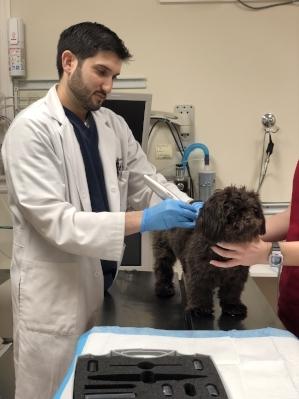
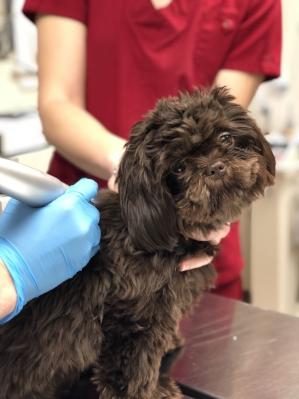
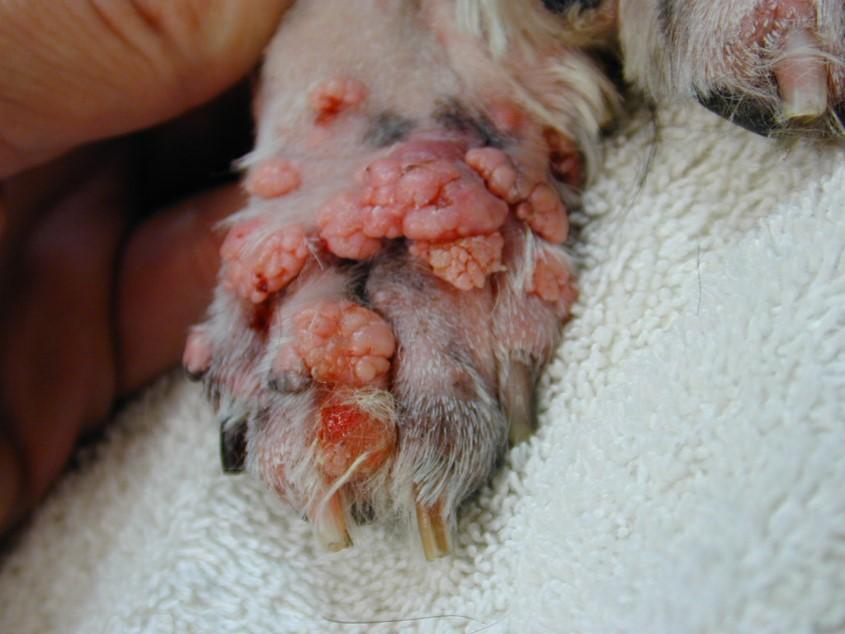
Cryosurgery is a medical procedure for rapidly freezing tissue in order to destroy abnormal or unwanted skin lesions, such as skin tags, warts, cysts, etc. A very cold substance (nitrous oxide) is expertly applied to a pet’s lesion with pinpoint accuracy. The tissue will scab, or 'crust' over within a few days and simply fall off within 14 days of the procedure. Cryosurgery is a safe, quick procedure that does not require sedation and results in little discomfort to your pet.
C02 Laser Surgery
Animal Dermatology Clinic employs CO2 laser surgery to perform more advanced and efficient surgical procedures, often with much less pain on recovery. CO2 lasers are often used in areas where traditional surgeries are not possible, such as within the earl canal, and can also be helpful in areas with good blood supply and where excess bleeding might occur, like the nose. This tool allows our dermatologists to make precise incisions with more limited bleeding than traditional surgery.
Since dermatologists often see patients with multiple lesions, CO2 laser surgery is ideally suited for our field. While traditional surgery for multiple lesions can take hours of cutting and suturing each individual site, with a CO2 laser, the procedure can often be done in half the time and the healing is rapid.
Specialized surgical procedures performed using a CO2 laser include removal of recurrent draining sores between the toes, ablation of skin cancer such as squamous cell carcinoma in cats, removal of growths or lesions on the pet’s nose and removal of some masses within the ear canal.
Find Out if Surgery is an Option for Your Pet’s Condition
While many pet owners consider surgery a last resort for their pets, often early surgical intervention may prevent further progression of disease, provide your pet relief and improve their quality of life.
The dermatologists and care team at Animal Dermatology Clinic are always happy to discuss whether a specific surgical procedure is the right choice for your pet.
Cryosurgery
Cryosurgery+2
1 01 Sebaceous adenomas
2 02 Sebaceous adenomas
3 03 Sebaceous adenomas 10 days post sx


Signs and conditions this addresses
Conditions we treat
Common questions
Ready to help your pet?
Request an appointment and our team will guide you through the next steps.